Me and my journey through life, from the highest of highs to the lowest of lows and all wacky, funny, deep, depressing and interesting points in between. My interests are varied from one end of the spectrum to another. Basically, the disappointing side of mediocre.
In the City of Angels is the fifth solo album by Yes lead singer Jon Anderson, released on this day in 1988.
Unlike most of Anderson's previous solo works, this album contains many additional songwriters. Consequently this is the most straight-ahead commercial pop album in his catalog, and sounds closer to a Toto album than his own earlier works. In fact, Toto performs on several songs. Jon reciprocated the favor by performing on their album The Seventh One (recorded about the same time as In the City of Angels).
A music video for "Hold on to Love" aired on MTV. In the video, the album is titled In The City of Lost Angels. Yes's bass player Chris Squire has a cameo appearance in the video starting at around the 1:28 mark.
When YES was on hiatus in 1975-76 each member of the band (Howe, Squire, White, Moraz) released a solo album. All would fail in comparison to Jon Anderson's Olias of Sunhillow, released on this day in 1976. Actually, in my opinion, this is the best of all of Anderson's solo albums to this day.
Olias of Sunhillow is a progressive rock concept album which tells the story of an alien race and their journey to a new world (the story printed in the LP jacket calls it "the earth", lowercase 'e') due to a volcanic catastrophe. Olias, the title character, is the chosen architect of the glider Moorglade Mover, which will be used to fly his people to their new home. Ranyart is the navigator for the glider, and Qoquaq (pronounced 'ko-quake') is the leader who unites the four tribes of Sunhillow to partake in the exodus.
The album's concept was inspired by the cover art by Roger Dean (!) for the 1971 Yes album Fragile, which depicts a tiny planet breaking apart and a glider escaping into space. Another link to Fragile lies in the fact that both albums have pieces (Fragile's "We Have Heaven") consisting of multiple vocal parts, with Anderson singing all of them. Anderson has stated that works by J.R.R. Tolkien and Vera Stanley Alder were also an influence, underlying the epic scope of the narrative compressed into the album. The album represented 8 months of physical work, but it took two years from conception to release. Anderson used more than a hundred tracks in putting the album together, overdubbing strings, organ, harp and percussion.
Since Anderson produced Olias soon after Vangelis had auditioned to be a part of Yes, there has been widespread speculation that Vangelis contributed to the album, with some fans going so far as to say that Olias represents the kind of sound that Yes would have created if Vangelis had in fact joined the band. However, both Vangelis and Anderson have denied that they collaborated on the album.
On this day, June 20th 1989, Anderson Bruford Wakeman Howe released their self titled album, using the Blue Desert painting by Roger Dean as the cover. This is a spin off from the group Yes, composed of all "former" members at the time. This is also THE album. Yes, THAT one. My desert island CD. The Relationship Story soundtrack. And the precursor for the Union album "disaster". I wish everyone owned this and appreciated it the way I do. I guess it was just a special time, and a special place, and a special person... I have covered this album in much more detail, giving my personal feelings about each song in previous posts here (Side One) and here (Side Two)
Well now we have reached the point where Yes is well established and start to expand their horizons. They have progressed to the point where some of their songs have gotten longer and longer (Heart of the Sunrise was over 10 minutes). This time, they created a piece of music that took up the entire length of side one. But first, the album cover:
Everyone has their favorite Christmas songs. Some are well known, some are not. Here are my faves that are probably not known to many people. Well, most people may know this one. It's a very young Greg Lake (from Emerson Lake & Palmer) with "I Believe in Father Christmas":
Not to be outdone, here's the lead singer of Yes, Jon Anderson, with one of those videos of recording the song videos. His song is called "Easier Said Than Done". It's from his Three Ships Christmas album.
Now for this last one I'm digging deep. This was also by members of Yes, drummer Alan White and bass player Chris Squire on vocals. It's called "Run With the Fox".
Lizard is the third studio album by the British band King Crimson. It was the second recorded by a transitional line-up of the group that never had the opportunity to perform live, following In the Wake of Poseidon. This is the only album by the band to feature bassist and vocalist Gordon Haskell and drummer Andy McCulloch as official members of the band.
Haskell was previously a classmate of Fripp's at Queen Elizabeth's grammar school, the pair having subsequently played together in the local band, The League of Gentlemen. Haskell later contributed vocals to the King Crimson track "Cadence and Cascade" on In the Wake of Poseidon, after Greg Lake left the band to join Emerson, Lake & Palmer. In a desperate turn to maintain a personnel in the band, Fripp asked Haskell to become an official member of King Crimson for the recording of Lizard. Another supporting musician on In the Wake of Poseidon, saxophonist/flautist Mel Collins was also asked to become a full-time member of this line-up, as was drummer Andy McCulloch, who replaced Michael Giles. The group was then augmented with session musicians, including another In the Wake of Poseidon alumnus – the noted jazz pianist Keith Tippett – together with Yes vocalist Jon Anderson (!), and brass/woodwind players Robin Miller, Mark Charig, and Nick Evans. Due to the album's penchant for a more jazz-inflected sound in comparison to many of the band's other works, in addition to the idiosyncratic nature of many of its tracks, responses towards the album have been varied since its release. Allmusic's Bruce Eder, comparing Lizard to its two predecessors, described the songs saying "[they] are longer and have extensive developmental sections, reminiscent of classical music". He also deemed that Jon Anderson's presence on "Prince Rupert Awakes" made the album stronger. He finished his review saying that "At the time of its release, some critics praised Lizard for finally breaking with the formula and structure that shaped the two preceding albums, but overall it's an acquired taste." Music critic Robert Christgau rated the album a B−, saying that the "jazziness" of the album projected a "certain cerebral majesty" but criticized Peter Sinfield's lyrics, qualifying them as "overwrought". Bingo. Robert Fripp has himself been very critical of the album, calling it "unlistenable". I mostly agree. Aside from the Jon Anderson parts this album is annoying. I guess I haven't acquired the taste yet.
As a follow up to the previous album from a year earlier, Yes released Keys to Ascension 2 on this date in 1997. It also followed the same format as its predecessor having live tracks with new studio tracks. Also, more Roger Dean ya'll:
Like the first seven tracks on the previous album, the first six tracks on Keys to Ascension 2 were recorded live in San Luis Obispo, California in March 1996. The second disc features studio recordings made in November 1996. Rick Wakeman wanted these studio tracks to be released with Jon Anderson's working title Know, with the disc of live tracks thrown in as a bonus. Wakeman's preference was not honored and by the time Keys to Ascension 2 was released, he was no longer in the band (again).
Keys to Ascension is a double album by the British progressive rock group Yes and was released on this date in 1996. The last time Jon Anderson, Chris Squire, Steve Howe, Rick Wakeman and Alan White had worked together on officially released studio recordings was 1978's Tormato. It is the band's fourth live album and fifteenth studio album. Yes, it's one of those live albums with new studio material that they create to make you spend more money.
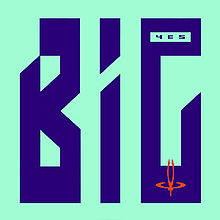
On this date in 1987, Yes finally (after over four years!) released a follow up to the massively popular 90125. Their 12th studio album was called Big Generator.
Magnification is the nineteenth studio album by progressive rock band Yes, released on this day in 2001 (December 4th in the US). It was the band's first album of the new century, and their second with a full orchestra (the first being Time and a Word from 1970 which I previously covered here and here). It marked the band's last studio album to date with vocalist Jon Anderson.
Before I go on with the history, I just want to point out that this is a fantastic album that should have gotten more attention. Unfortunately the release date of 09/10/01 did a lot of damage to any possible record sales as the world changed on that day.


.jpg)
.jpg)